
Authors: Dr Sujoy Bhattacharjee, Dr. Avijeet Prasad, Dr. Swapnil Priyadarshi, Dr Anmol Arpan Nand
DOI: 10.18231/j.ijos.12735.1764246749
Keywords: Kinematic alignment, Haptic-guided bone resection, Postoperative pain trajectory, Gait recovery metrics, Coronal and sagittal plane accuracy
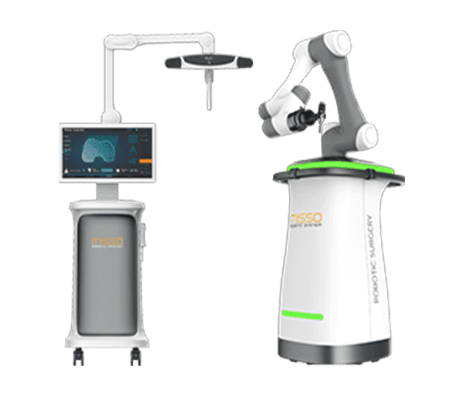
Abstract: Background: Robotic-assisted total knee arthroplasty (rTKA) has been developed to enhance precision and improve early clinical outcomes over conventional manual TKA (mTKA), especially in achieving optimal implant alignment and soft tissue preservation. Objective: To compare early clinical and functional outcomes of rTKA and mTKA using cruciate-retaining (CR) implants at a minimum follow-up of 18 months. Methods: In this observational study, 932 patients (1696 knees) with end-stage osteoarthritis who underwent rTKA (n=489) or mTKA (n=443) between February 2022 and January 2023 were evaluated. Standardized postoperative rehabilitation protocols were followed. Outcomes were assessed using the American Knee Society Score (AKSS), Visual Analogue Scale (VAS) for pain, range of motion (ROM), and radiographic alignment. Assessments were recorded preoperatively, and at 3, 6, and 18 months postoperatively. Results: Both groups were demographically comparable. rTKA showed significantly lower postoperative VAS scores (POD1: 4.3 vs. 5.1; POD3: 3.1 vs. 3.9) and faster functional recovery, with 91% achieving straight leg raise on POD1 vs. 85% in mTKA. No major complications were noted, and alignment accuracy remained within 5° in both groups. While KSS and ROM improvements were similar at 18 months, rTKA showed greater gains at early follow-ups. Conclusion: rTKA using the Cuvis Joint® system demonstrated superior early pain relief, faster rehabilitation milestones, and comparable long-term functional outcomes to mTKA. These findings support the short-term clinical benefits of robotic-assisted techniques, although long-term studies are needed to confirm sustained advantages.