Loading

A Revolutionary Advancement in Knee Replacement Surgery

If you suffer from severe arthritis of the knee, you may already be familiar with total knee replacement surgery. However, advancements in technology now allow for a more precise, patient-customized approach, offering greater accuracy, improved surgical safety, and a more natural feel post-surgery.

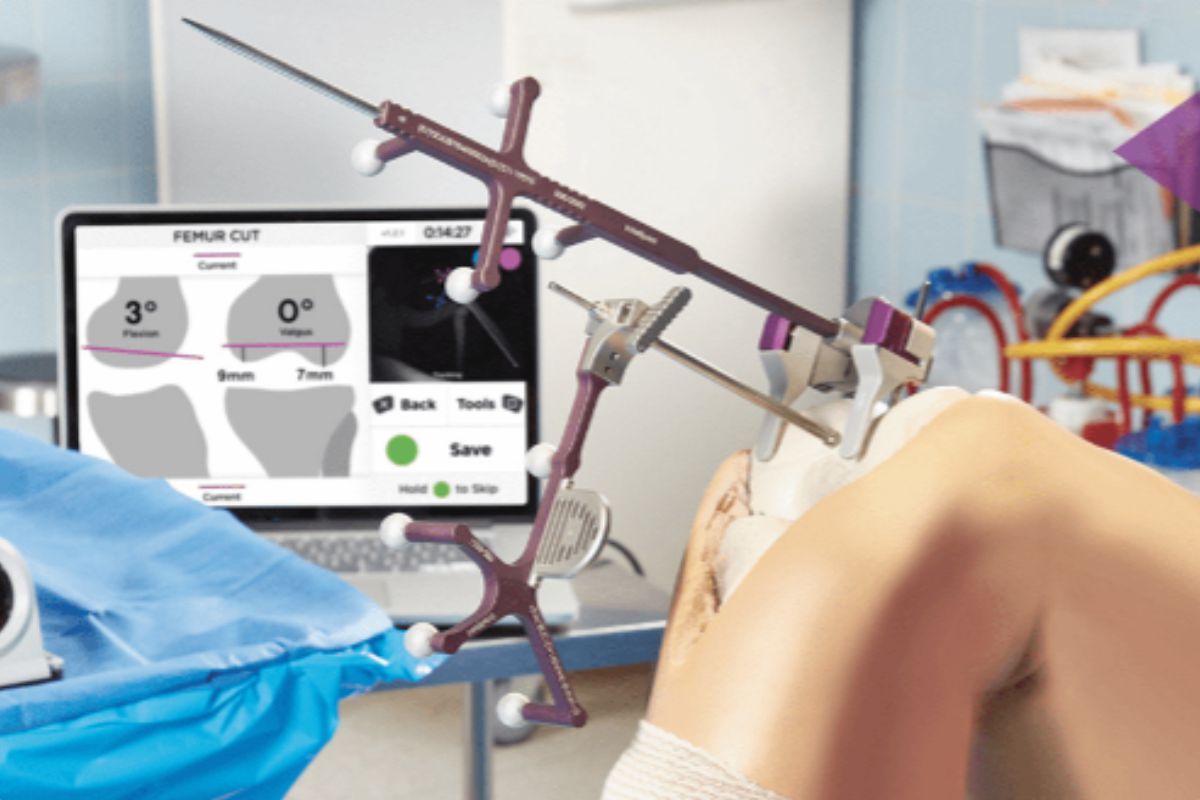
Traditional knee replacement surgery has been performed for over 40 years, but 3D navigated total knee replacementintroduces an innovative, patient-specific technique that ensures perfect alignment of the prosthetic knee with your unique bone structure. Using advanced 3D computer modeling and custom surgical instruments, this procedure provides a superior fit, faster recovery, and long-term success.

How 3D Navigated Total Knee Replacement Works

The process begins 6 to 8 weeks before surgery with a specialized MRI scan of your knee, hip, and ankle. This scan is used to create a detailed 3D computer model of your entire limb. The model is sent to the surgeon, allowing for precise preoperative planning by digitally aligning the knee implant with your unique bone structure.

Unlike traditional methods, where alignment is estimated during surgery, 3D navigation allows the surgeon to make precise adjustments before even making an incision. This ensures that the prosthetic knee is positioned with perfect alignment, where a straight line from the center of your hip to your ankle passes directly through the center of the knee. Proper alignment is crucial for long-term success, reducing wear and ensuring better mobility.

Custom Surgical Instruments for a Perfect Fit

Once the surgeon finalizes the digital model, the data is sent to 3D printing engineers, who create patient-customized surgical guides that contour perfectly to your femur (thighbone) and tibia (shinbone). These guides match your anatomy with extreme precision, ensuring a tailored approach that minimizes bone loss and preserves healthy cartilage.

This technology allows for:

  • Highly precise bone preparationfor implant placement
  • Shorter surgery time, reducing anesthesia risks
  • Lower risk of infection, bleeding, and complications
  • Less post-surgical pain and stiffness
  • Faster rehabilitation with a more natural-feeling knee

Recovery & Rehabilitation

Rehabilitation is essential for regaining mobility. After surgery, you will begin walking with a walker for about a week, transitioning to a cane for six weeks. Commitment to home exercises and physical therapy (three times a week for three months) is vital for optimal recovery. The final step is building strength at the gym, ensuring long-term success and improved quality of life.

By choosing 3D navigated total knee replacement, you benefit from a cutting-edge, customized approach that provides greater precision, faster recovery, and superior long-term results.