

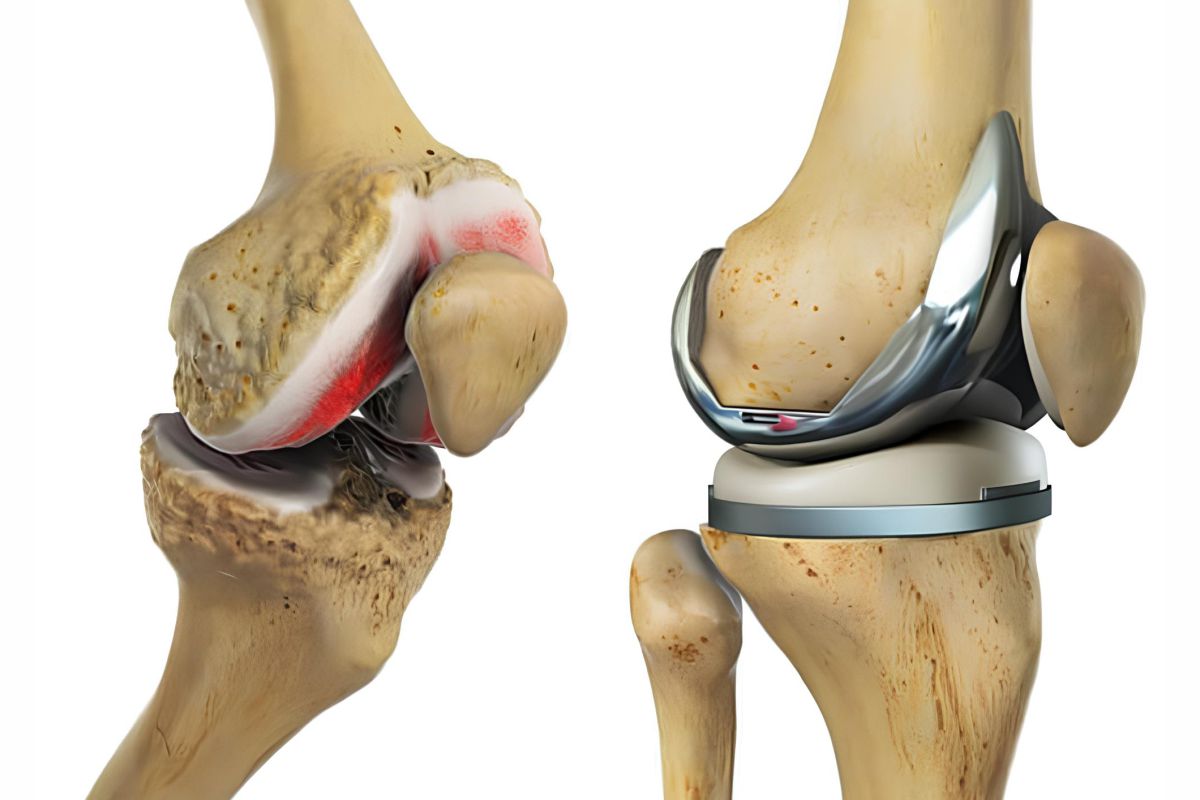
When is Total Knee Replacement Needed?
Total knee replacement is recommended for patients with severe arthritis or extensive knee damage that affects the entire joint, causing chronic pain, stiffness, and limited mobility. When medications, physical therapy, and other treatments are no longer effective, this surgery can provide long-term pain relief and restore function.
Patients who struggle with walking, climbing stairs, or even simple movements due to knee pain may benefit from this procedure. It helps correct deformities and improves stability, allowing for a more active lifestyle.
How is Knee Replacement Surgery Performed?
During joint replacement surgery, the damaged cartilage and bone are replaced with a prosthetic joint made of titanium, cobalt chrome, ceramic, or polyethylene (plastic). This artificial joint is securely attached to the bone using special cement or a technique that allows bone to grow around it for stability.
Once the new joint is in place, physical therapy is essential to regain movement and function.
How is Total Knee Replacement Performed?
During total knee replacement, the damaged inner and outer articular surfaces of the femur (thigh bone) and tibia (shin bone) are replaced with prosthetic components. These implants mimic the natural knee joint and often include a replacement for the anterior cruciate ligament (ACL) to help maintain normal knee function. The patella (kneecap)may also be resurfaced, depending on the patient’s condition.
Hospital Stay & Recovery
- Hospital stay: Typically 4 to 5 nights
- Early mobility: Patients are encouraged to stand the day after surgery
- Physiotherapy: Starts immediately with multiple daily sessions
Thanks to advanced, minimally invasive techniques, most patients begin movement exercises the day after surgery, promoting faster recovery.
What to Expect After Surgery?
The primary goal of total knee replacement is pain relief and movement restoration. While the procedure is not designed to significantly increase flexibility, many patients experience a better range of motion, as the pain that once restricted movement is eliminated.
How to Improve Recovery?
A strong pre-surgery physiotherapy routine can lead to better outcomes. Patients can improve recovery by:
- Strengthening knee-supporting muscles
- Increasing joint flexibility
- Enhancing overall mobility before surgery
Dr. Sujoy specializes in advanced knee replacement techniques to help patients regain pain-free movement and improve their quality of life. Schedule a consultation today to explore your options!
What is Robotic Total Knee Replacement?
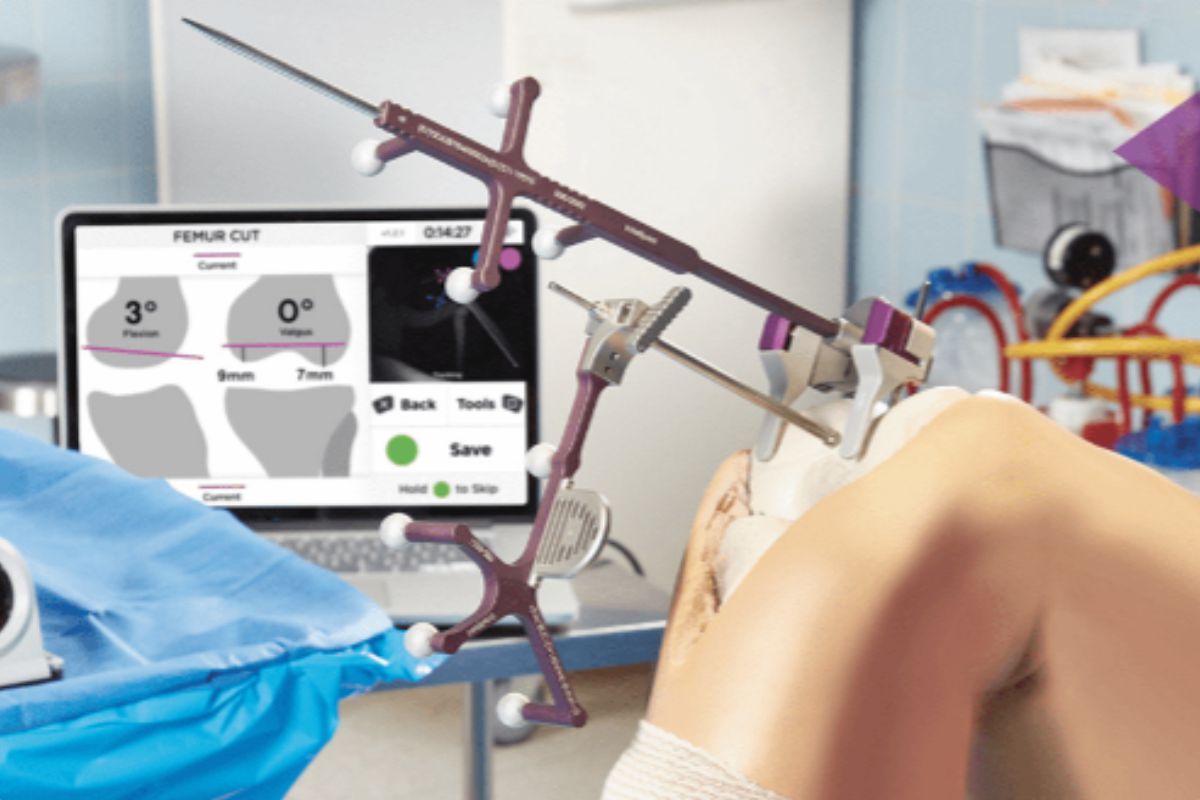
Conventional knee replacement surgery has been performed for over 40 years, but robotic total knee replacement introduces an innovative, patient-specific technique that ensures perfect alignment of the prosthetic knee with your unique bone structure. Using advanced 3D computer modelling and custom surgical instruments, this procedure provides a superior fit, faster recovery, and long-term success.
How Robotic Total Knee Replacement Works?
The process begins 6 to 8 weeks before surgery with a specialized MRI scan of your knee. This scan is used to create a detailed 3D computer model of your entire limb. The model is sent to the surgeon, allowing for precise preoperative planning by digitally aligning the knee implant with your unique bone structure.
Unlike traditional methods, where alignment is estimated during surgery, 3D navigation allows the surgeon to make precise adjustments before even making an incision. This ensures that the prosthetic knee is positioned with perfect alignment, where a straight line from the center of your hip to your ankle passes directly through the center of the knee. Proper alignment is crucial for long-term success, reducing wear and ensuring better mobility.
Custom Surgical Instruments for a Perfect Fit
Once the surgeon finalizes the digital model, the data is sent to 3D printing engineers, who create patient-customized surgical guides that contour perfectly to your femur (thighbone) and tibia (shinbone). These guides match your anatomy with extreme precision, ensuring a tailored approach that minimizes bone loss and preserves healthy cartilage.
This technology allows for:
- Highly precise bone preparation for implant placement
- Shorter surgery time, reducing anaesthesia risks
- Lower risk of infection, bleeding, and complications
- Less post-surgical pain and stiffness
- Faster rehabilitation with a more natural-feeling knee
Recovery & Rehabilitation
Rehabilitation is essential for regaining mobility. After surgery, you will begin walking with a walker for about a week, transitioning to a cane for six weeks. Commitment to home exercises and physical therapy (three times a week for three months) is vital for optimal recovery. The final step is building strength at the gym, ensuring long-term success and improved quality of life.
By choosing Robotic total knee replacement, you benefit from a cutting-edge, customized approach that provides greater precision, faster recovery, and superior long-term results.
Dr. Sujoy specializes in both conventional and robotic advanced knee replacement techniques to help patients regain pain-free movement and improve their quality of life. Schedule a consultation today to explore your options!