

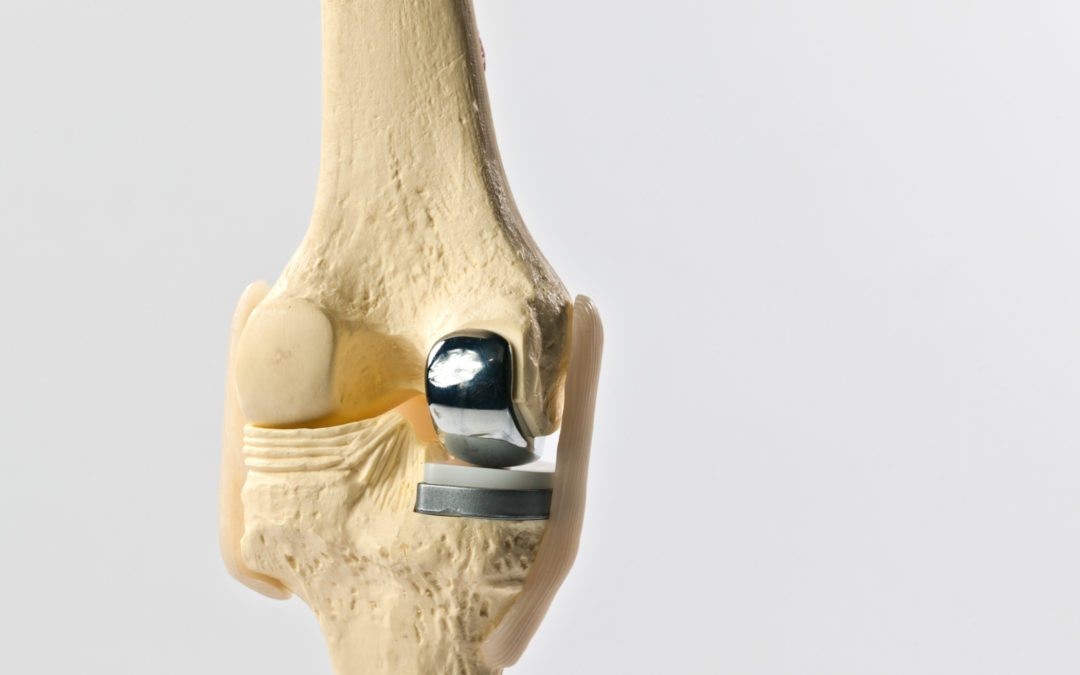
A Unicondylar Knee Replacement or Unicompartmental Knee Replacement is performed when arthritis is confined to only one compartment of the knee. It is also called a partial knee replacement. The knee can be divided into three compartments: patellofemoral, the compartment in front of the knee between the knee cap and thigh bone, medial compartment, on the inside portion of the knee, and lateral compartment which is the area on the outside portion of the knee joint.
The arthritis is surgically removed and replaced with a prosthesis (artificial knee compartment). Unfortunately, not all patients are suitable for this operation. Your surgeon will discuss your specific case with you.
Is it a smaller operation that a total knee replacement?
Yes. Having a UKR is a much less surgically invasive procedure than a total knee replacement. The operation time is shorter, less time is spent in hospital, rehabilitation is more rapid and the knee feels more “natural” compared to a total knee replacement.
Provided that you are a suitable candidate for having a Uni-knee, excellent long-term results, measured by improved function and reduced pain, can be expected from this operation.
When is a Unicondylar Knee Replacement helpful?
This operation is not suitable for all arthritis patients. Your surgeon will assess a range of factors such as: where and how severe your arthritis is, how much “wear and tear” your knee joint will be subject to over time, the degree of knee deformity and the amount of stiffness in your knee.
This procedure preserves the remaining healthy bone, cartilage and ligaments of the knee while selectively targeting the damaged area.
Robotic Unicondylar Knee Replacement
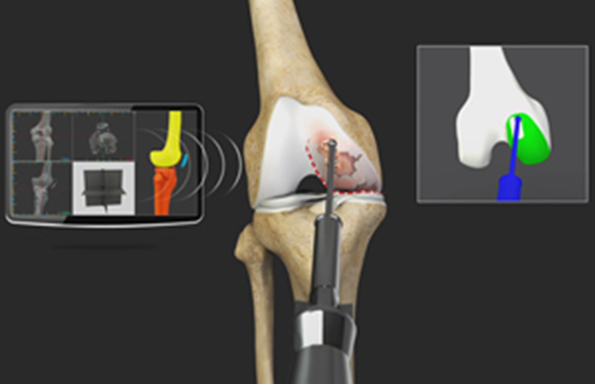
Unicondylar knee replacement can also be performed with the assistance of a robot.
How Robotic Unicondylar Knee Replacement Works?
Preoperative CT imaging is used to create a virtual 3-dimensional model of the knee. This information is fed into the robotic system and helps your doctor design a specific surgical plan. Unlike traditional methods, where alignment is estimated during surgery, 3D navigation allows the surgeon to make precise adjustments before even making an incision The procedure is performed with the robotic arm inserted through a 4-to 6-inch incision over the knee. The robotic system provides your doctor with visual, audio and tactile feedback as the bone is cut and the implants positioned. This results in a high degree of precision, minimal damage to the bone and surrounding ligaments and accurate positioning of the implants, which is very important for a successful and long-lasting knee replacement.
Benefits of robotic-assisted surgery include:
- Shorter surgery time, reducing anaesthesia risks
- Lower risk of infection, bleeding, and complications
- A joint replacement that is well-aligned and stable
- Shorter hospital stay
- Quicker recovery
- More natural feel to the knee
- A total knee replacement may be performed later if needed
Postoperative Care
Following surgery, you may be able to leave the hospital on the same day if your doctor feels you have recovered well. Recovery depends on various factors but is generally quick. Physical therapy may be recommended. You are advised to maintain a healthy weight to minimize stress on the joint.
Dr. Sujoy specializes in both conventional and robotic advanced unicondylar knee replacement techniques to help patients regain pain-free movement and improve their quality of life. Schedule a consultation today to explore your options!